
Searching Edwards County Civil Dockets
Start your Edwards County civil docket search at the Kansas District Court Public Access Portal. Accept the agreement first. Then select District, pick a search mode from Case Number, Party Name, Business Name, or Party As Business Name, and set the county to Edwards County. If the option appears, open Additional Search Filters. Limit the results to Civil, since that step screens out criminal docket noise. Adding a filing date range helps when a party name is common or a business has years of filings.
Have the full case number if you can. Newer Edwards County court records use an ED-prefixed format like ED-2024-CV-000001. Older civil filings may appear as 2021-CV-000123. Both are examples of structure only.
- Select District and the proper search type.
- Enter the exact number or a well-formed party name.
- Choose Edwards County and the Civil filter.
- Complete the human check and compare possible matches.
- Open the case and read events, settings, and disposition in date order.
Edwards County Civil Docket Filters
For deeper docket search tricks, the official Smart Search guide covers search tips, advanced filters, and the limits of converted records. A party-name search casts a wider net than a case-number lookup. Remember that Business Name and Party As Business Name are separate choices, so match your pick to the caption or role on the source document.
| Portal field | Civil use | Practical limit |
|---|---|---|
| Case Number | Exact Edwards case | Older format may lack ED prefix |
| Party Name | Person in the caption | Common names can return many cases |
| Business Name | Entity search | Use the legal name when possible |
| Case Type | Choose Civil | Family and probate may be separate types |
| File Date | Limit the likely period | It is not a hearing-date search |
The live form also uses a human-verification control. Registration rules and guest access can change, so follow whatever the current screen asks of you.
Inside an Edwards County Civil Docket
An Edwards County civil docket pulls several layers into one index. The header lists the court, the case number, case type, filing date, status, location, and the judicial officer assigned. Party fields separate plaintiff from defendant, or petitioner from respondent. Individual entries then track service, answers, motions, orders, settings, judgment, and post-judgment work.
| Parties | Names, roles, attorneys, and representation status when public |
|---|---|
| Initiating filing | Complaint or petition, summons, and service history |
| Responses | Answer, counterclaim, amended pleading, or waiver |
| Motions and orders | Request, response, hearing, and the court's ruling |
| Settings | Date, time, judge, location, type, and reset status |
| Disposition | Judgment, decree, dismissal, trial result, or other closing entry |
| Later activity | Satisfaction, garnishment, execution, modification, or appeal |
An events index lists docket entries, not every page in the file. If an Edwards County entry names a document but shows no image you can open from home, turn to the official court-record access explanation for how to view it.
Edwards County Civil Docket Totals
The Kansas fiscal-year 2024 table puts civil filings in Edwards County at 109 total. Regular actions account for 11 of those. Limited actions make up 59. The domestic-relations categories fill out the rest of the reported total. Treat these figures as workload groups, nothing more. A number in a column says nothing about who prevailed. It cannot tell you whether a claim had merit, or whether any given file is open to the public.
Limited civil is not a synonym for regular civil. The statewide report gives each category its own column, so the split matters. Before you label any matter one way or the other, search the actual Edwards County docket. Family, probate, protection-order, and other petition-based cases may also run through different portal filters. Access rules can differ too.
Civil Case Types on the Docket
For civil work, Edwards County District Court is the state court of consequence. It handles regular and limited actions, domestic relations, probate, protection orders, and related district matters. Kansas district courts sit with general jurisdiction. Small claims and other limited matters can still route through the magistrate structure. That structure sits inside the same district system. And a dispute involving a city does not turn into a separate municipal civil docket just because a city is a party.
- Regular civil
- The statewide reporting group for general civil actions.
- Limited civil
- A separate Kansas reporting group, including the limited contract filings shown in the Edwards table.
- Domestic relations
- Family-related case categories that may have added access limits.
- Default judgment
- A judgment entered after a required response or appearance did not occur, only when the record says so.
- Disposition
- The judgment, decree, dismissal, or other action that resolves all or part of the case.
Trust the description the court displays on the Edwards County civil docket itself.
Edwards County Civil Docket Flow
A civil docket in Edwards County usually opens with a complaint or petition. The clerk logs the summons or citation and its return of service next. From there, the case may branch into an answer, a counterclaim, a waiver, or a default. Motions and discovery entries pile up. They can point toward a conference, a settlement, a hearing, a trial, or a ruling that resolves the claims. Edwards County dockets do not truly end at a judgment, decree, or dismissal. Later enforcement filings can keep the record moving.
Edwards County civil flow: Filing › Service › Response › Motions and Pretrial › Hearing or Trial › Judgment › Post-Judgment Activity
Keep a motion separate from the order that rules on it. A motion is only a request. It asks the court to act. By itself it settles nothing. A dismissal label can mislead, since it says nothing about whether the party may refile. A judgment amount on the docket does not tell you whether the money has actually been collected. Before treating the first judgment as the record's final word, check the later entries. Look for satisfaction, garnishment, abstract, appeal, and later orders.
Civil Docket Settings and Hearings
A civil setting can cover many things. In Edwards County it might be a motion, a status conference, a pretrial conference, a trial, a review, or some other case-specific event. The settings block typically lists the date, time, judicial officer, location, type, and status. Look also at the events index. There, a notice of setting or a later order may reset or cancel that first date.
Always read the newest entry alongside the settings panel. After a continuance, the old date stays in the chronology. Words like "reset," "continued," "passed," "vacated," or "canceled" are clues. The later notice or clerk confirmation tells you which setting actually governs. The court posts no separate daily or weekly district calendar page.
Need a hearing-date workflow? The Edwards County Court Dates page splits district settings from municipal sessions.
Edwards Civil Dockets Versus Land Records
A fight over land can land in the Edwards County civil docket. The paper trail of who owns it does not. Deeds, mortgages, leases, plats, UCC filings, and liens live with the Edwards County Register of Deeds, not with the court. The Clerk of the District Court holds the other half of the story: pleadings, orders, hearing settings, and any judgment the judge signs. So match your search to the record. Want to know who filed a suit over the parcel? Pull the court docket. Want to know who holds title? Go to the deed records.
| Need | Custodian |
|---|---|
| Complaint, answer, motion, order, judgment | Clerk of the District Court |
| Deed, mortgage, lease, plat, UCC, land lien | Edwards County Register of Deeds |
| Hearing date or case status | Civil docket and district clerk |
Sometimes all you have is a parcel number or a contract. Turn that into a name first. Once you know the party or business, an Edwards County docket search with civil filters and a likely filing window will move much faster.
Edwards County Civil Docket Access
Online access is only part of the picture. A terminal at the courthouse can show public court records. A home docket search will not reach those. For something specific, the district clerk is the person to ask. She can pull a named pleading, an order, a judgment, an events index, or a certified copy. If you mail a Kansas Open Records Act request instead, be specific. Name Edwards County District Court. Give the case number if you have it, describe the document, and add the approximate date.
- Search the statewide portal by number, party, or business.
- Use the courthouse public terminal for remote omissions.
- Visit or call the district clerk for a precise file or current setting.
- Request eligible images under 24th District Rule 109 by providing an email address in writing.
- Use the Kansas court-record request form for a defined public record.
- Order transcripts from the certified court reporter, not the clerk.
The local email-image note generally covers images from January 1, 2008 forward, and confidentiality rules still apply. Anything older may take an in-person visit or a written request.
Edwards Civil Docket Access Rules
Even a public Edwards County civil docket can hold material that stays off limits. Kansas Supreme Court Rule 24 lists the identifiers a filing must shield. Rule 23 governs restricted designations plus motions to seal. A clerk may set contested material aside. That hold lasts while a compliance or sealing question is decided. So a case file can be open overall yet closed in part.
Access point: Rule 22 allows public access through the portal and courthouse terminals, but the case type, document type, statute, rule, and court order still control.
Kansas open-records law sets the outer limits, not a menu of demands. A clerk in Edwards County need not build a fresh report for you. Some closed records stay closed even after you ask. K.S.A. 45-218 does set a clock, though. The clerk must act on your request as soon as possible, and no later than the end of the third business day.
Edwards Civil Dockets Exclude Municipal Cases
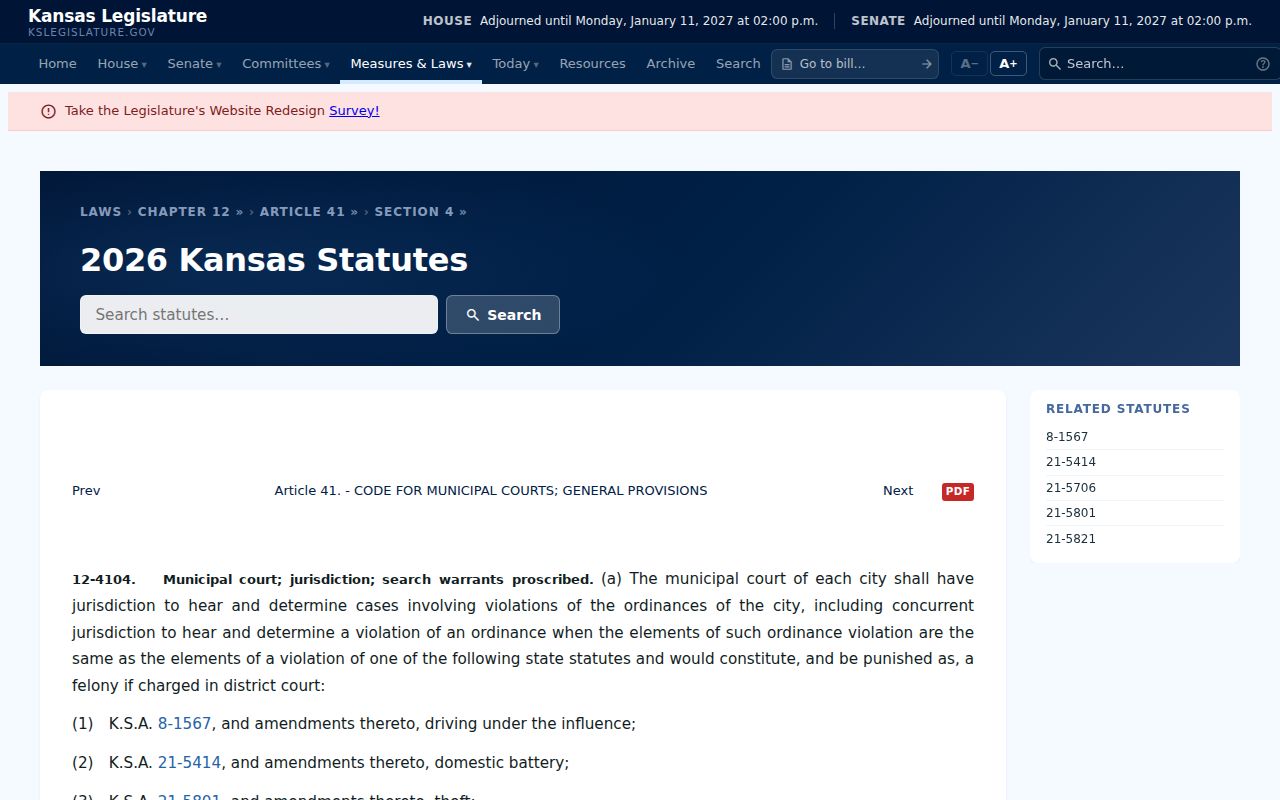
City ordinance violations in Kansas belong to municipal court, and K.S.A. 12-4104 spells out that authority. That separate jurisdiction means those cases do not show up in the ordinary Edwards County civil docket.
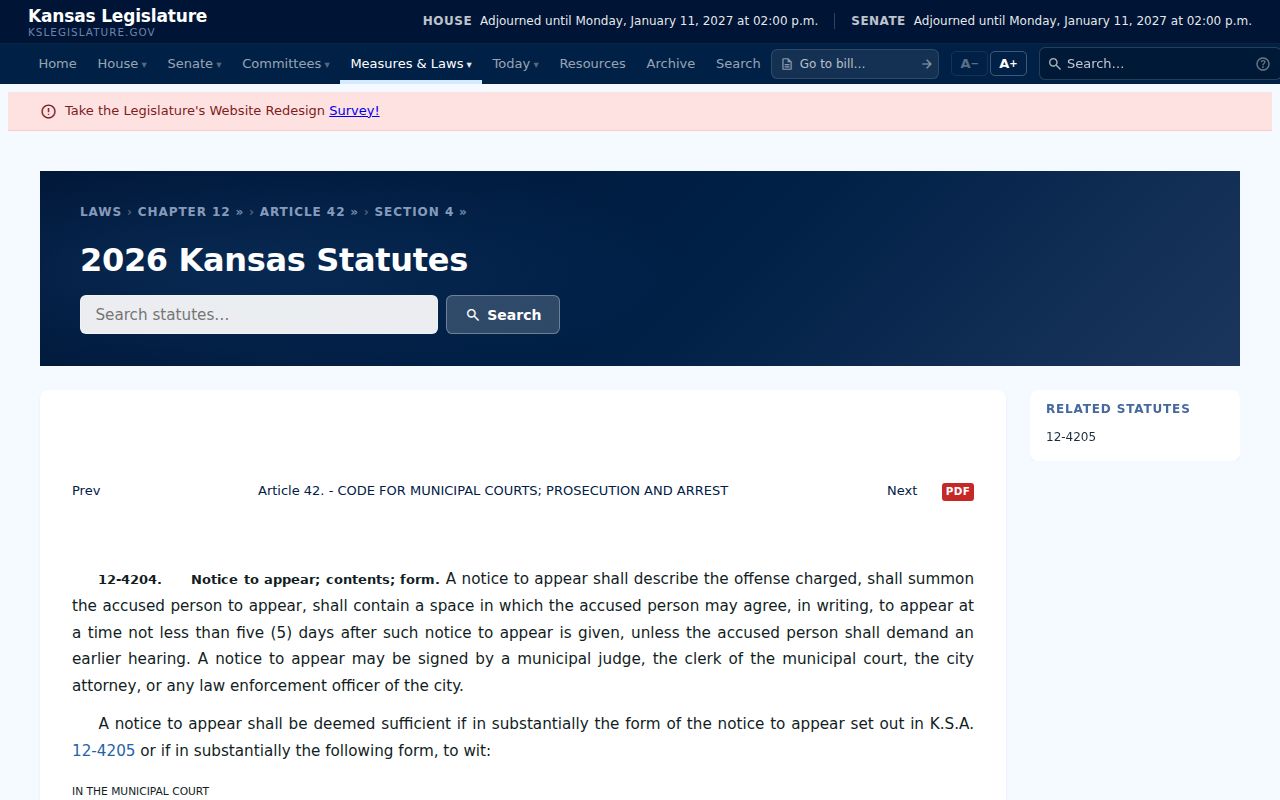
K.S.A. 12-4204 spells out what a notice to appear must contain and when it must be served. That statute page shows where city enforcement ends and district court begins.
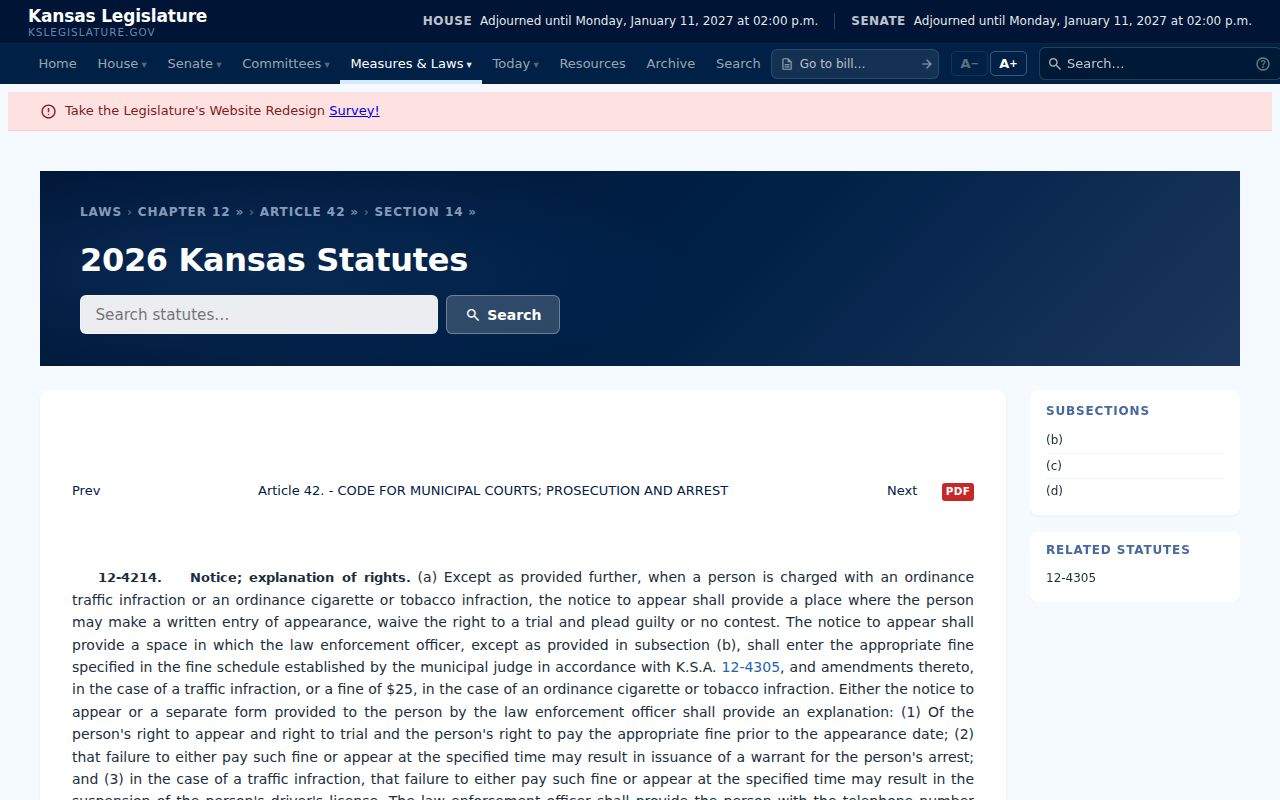
A municipal notice is not a district civil pleading, even when both records involve the same Edwards County resident. K.S.A. 12-4214 covers municipal pleas, payment, and what happens after a missed appearance.
Read together, these statutes keep a city case from being confused with an Edwards district civil action.